


A wig grip, sewn-in clips, or an adjustable elastic band will hold a wig for a full day with no adhesive. Styling gel holds 1 to 3 days, wig tape several days to a week, and liquid lace adhesive 1 to 4 weeks. A unit sewn onto braids holds 4 to 6 weeks.
That is the entire decision, and it runs one direction: every step up in hold is a step up in what it costs your hairline. Pick the shortest hold that gets you through the day you actually have.
How do you get a wig to stay on?
| Method | How long it holds | Removal | Best for | Trade-off |
|---|---|---|---|---|
| Wig grip band | A day | Seconds, no product | No-adhesive wear, sensitive skin, protecting edges | Loosens with age; will not survive a workout |
| Wig cap and bobby pins | A day | Seconds | Anyone with enough natural hair to pin into | Pins slip; useless on a shaved or very short head |
| Sewn-in combs or clips | A day, firmer than a grip | Seconds | Daily on-and-off wear | The same anchor points every day cause traction |
| Adjustable elastic band | A day | Seconds | A cheap upgrade to any cap that runs loose | Too tight gives you a pressure headache |
| Styling gel at the hairline | 1 to 3 days | Water and shampoo | A laid front without committing to adhesive | Flaking and buildup along the hairline |
| Wig tape | Several days to a week | Adhesive remover | Lace fronts, controlled and repeatable hold | Lifts with sweat and oil; can irritate skin |
| Liquid lace adhesive | 1 to 4 weeks | Adhesive remover | The longest hold; minimal natural hair | Highest damage risk. Patch test first. |
| Sewn onto braids | 4 to 6 weeks | Takedown appointment | Set-and-forget wear | Constant tension; washing the scalp gets harder |
Hold times assume normal wear. Heat, sweat, and oily skin cut every adhesive figure short, sometimes by half.
How do you put a wig on so it does not move?
Most slipping is a preparation problem rather than a product problem. Five steps.
- Flatten your own hair. Cornrow it, flat twist it, or wrap it, then pin it down. Lumps underneath push the cap off your head, and a unit sitting on a bump has nothing gripping the scalp beneath it.
- Put on a wig cap. It holds everything flat and gives clips and pins something consistent to bite into.
- Add the grip band if you are using one. It sits along the hairline and around the nape, under the wig, not over it.
- Position the wig before you secure anything. Line the front of the cap up about a finger's width behind your natural hairline, then pull it down at the nape. Securing first and adjusting after is what drags the lace out of shape.
- Secure back to front. Nape clip or elastic first, then the sides, then the front. Working front to back leaves slack that gathers at the back of your head.
Full lace-specific detail, including where to place the front and how to lay the perimeter, is in the lace front wig guide.
How does a wig grip work?
A wig grip is a band of double-sided velvet that wraps the head and fastens at the nape, usually with Velcro. Velvet has a directional nap, so it resists sliding in the same way a velvet hanger keeps a dress from slipping off. One face grips your cap or scalp, the other grips the inside of the wig.
What it is good at: no adhesive touches your skin, it washes, it reduces friction between the lace and your hairline, and it spreads pressure instead of concentrating it at clip points. That last part is why people who get wig headaches often stop getting them.
What it is not good at: it loses elasticity over months, and it will not hold a unit through a workout, a windy day, or anything that involves your head moving fast. It is a daytime hold, not a long-term one.
Do wig clips and combs hold better than a grip?
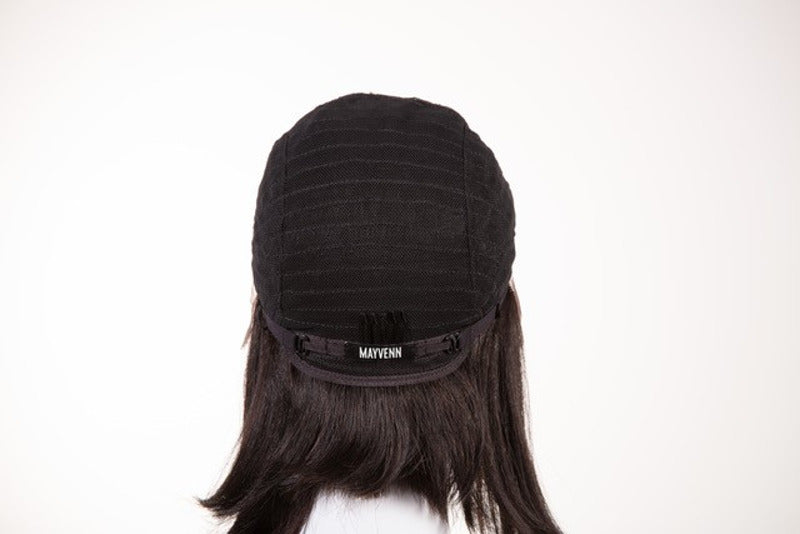
Yes, firmer, but only if you have hair to anchor into. Clips and combs work by closing onto your own hair, so on a shaved head or very short hair they have nothing to hold. Most units come with a few pre-installed at the nape and temples, and you can sew in more.
The catch is that a clip concentrates its pull on one small patch of hair, and if it lands on the same patch every day that is exactly the pattern that produces traction thinning. Move the clips slightly between wears, and stop using one entirely if the hair under it is getting sparse or the spot is sore.
Bobby pins are the flexible version of the same idea. They spread the load, cost nothing, and go wherever you need them. Buy them close to your natural color, use them to pin braids or twists flat first, then use more to pin the unit into that foundation once it is positioned.
Does a wig cap help a wig stay on?

Indirectly, and it matters more than people expect. A cap does not grip your scalp, but it flattens your hair into a smooth, even surface, and a wig sitting on a smooth surface has far more contact area than one perched on lumps. It also keeps your own hair off the inside of the unit, which keeps the wig cleaner.
Mesh caps breathe better and suit longer hair and sensitive scalps. Nylon caps hold hair flatter and grip slightly better. Either way, match it roughly to your scalp tone so it does not show through a part.
The cheapest real upgrade to any loose cap is an adjustable elastic band sewn across the inside of the nape. It costs a few dollars, takes ten minutes, and converts a unit that shifts all day into one that sits. Tighten it until the wig stops moving and no further, because over-tightening is how you get the headache people blame on wigs generally.
How long does wig glue hold?
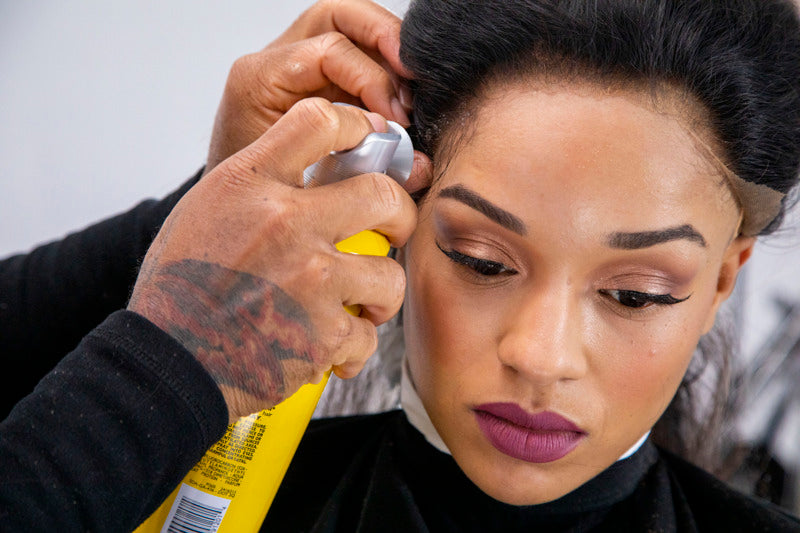
Liquid lace adhesive holds 1 to 4 weeks depending on the formula, your skin, and how much you sweat. Wig tape holds several days to about a week. Oily skin and heat pull both toward the short end.
Adhesive is the right answer when you have minimal natural hair to anchor into, or you need a front that will not move for an event. It is the wrong answer as a default, because the failure mode is cumulative: the perimeter lifts, you re-glue it, and the hairline spends weeks under adhesive and tension. That cycle, not any single install, is what thins edges.
If you are using it, do these five things. Patch test on your inner arm 24 hours before, and do not skip this, because adhesive reactions are common. Clean the skin with alcohol so oil does not undercut the bond. Use a scalp protector underneath. Apply thin layers with a brush and let each one tack up rather than laying down one thick coat. And take it off with proper adhesive remover, never by pulling, which takes lace and edges with it.
How do you secure a wig without glue?
Stack the no-adhesive methods instead of relying on one. A flattened base, a wig cap, an elastic band sewn at the nape, a grip along the hairline, and bobby pins at the temples together hold better than any single one of them, and none of it touches your skin with adhesive.
Styling gel sits in between. It gives you a laid front for 1 to 3 days and washes out with water, so it carries none of the removal risk of true adhesive. It does flake as it dries out, and it builds up along the hairline, so it wants washing off rather than layering over.
Construction matters too. A unit with an adjustable strap, a snug cap, and pre-installed combs needs far less help than a loose cap does. Headband wigs sidestep the question entirely, because the band itself is the securing mechanism.
Why does your wig still slip?
- The cap is too big. No amount of grip fixes a unit that does not fit. Add an elastic band at the nape or size down.
- Your hair underneath is not flat. Bulk under the cap is the most common cause and the easiest to fix.
- You secured it before positioning it. Place the unit first, then clip back to front.
- The grip band is old. Velvet nap wears down and elastic stretches. Grips are consumable.
- Product on your hairline. Oils and heavy moisturizer at the perimeter stop anything from gripping. Clean that strip before installing.
- You are sleeping in it. Overnight movement loosens every method. If you must, follow how to sleep in a wig.
Which securing method should you use?

- You wear a wig daily and take it off at night. Wig cap, elastic band, and a grip. No adhesive, nothing to remove, and your edges stay where they are. Any unit works, including ready-to-wear wigs.
- You want the fastest possible on-and-off. Skip securing hardware altogether. Headband wigs come in 12, 16, and 20 inches in curly and kinky textures and 14, 18, 22, and 26 inches in straight, body wave, and deep wave.
- You need a flawless front for one event. Wig tape or gel, not glue. You get the hold you need for the day without a multi-week commitment at the hairline.
- You have little or no natural hair to anchor into. Adhesive is the method that works, so do it properly: patch test, scalp protector, thin layers, proper remover. Pair it with a well-constructed human hair wig that will justify the install.
- You want to forget about it for a month. A sewn-down install holds 4 to 6 weeks, but plan the takedown before you start, and read how long wigs last for what continuous wear does to the unit.
Securing a wig FAQ
How do you get a wig to stay on?
Flatten your natural hair, add a wig cap, then secure with a grip band, sewn-in clips, or an adjustable elastic at the nape. Position the unit before securing anything, and work back to front. Those steps hold a wig for a full day with no adhesive at all.
How long does a wig grip hold?
A full day of ordinary wear. It will not hold through a workout, a windy day, or vigorous movement, and the velvet nap and elastic wear out over months. Treat a grip as a consumable and replace it when the wig starts creeping backward during the day.
How do you keep a wig on without glue?
Stack methods rather than relying on one. A flattened base, a wig cap, an elastic band sewn at the nape, a grip band, and bobby pins at the temples together outperform any single method. Styling gel adds a 1 to 3 day laid front and washes out with water.
How long does wig glue last?
Liquid lace adhesive holds 1 to 4 weeks depending on the formula, your skin type, and sweat. Wig tape holds several days to about a week. Oily skin and heat cut both figures short. Always patch test 24 hours ahead, and remove with proper adhesive remover rather than pulling.
Why does my wig keep sliding back?
Usually the cap is too large or your own hair is not flat underneath. Sew an adjustable elastic band across the inside of the nape, cornrow or wrap your hair before capping it, and clean product off your hairline so the grip has something to hold.
Do wig clips damage your hair?
They can, if the same clip lands on the same patch every day. That repeated concentrated pull is the pattern behind traction thinning. Shift clip placement between wears, and stop using one if the hair beneath it thins or the spot gets sore.
Can you wear a wig with no hair underneath?
Yes. Clips and pins need hair to anchor into, so with a shaved or very short head use a grip band, a snug adjustable cap, or adhesive instead. A well-fitted cap with an elastic at the nape holds better on a bare scalp than most people expect.
Why do wigs give me a headache?
Almost always pressure in one place: an over-tightened elastic band, a cap a size too small, or clips pulling at a few points. Loosen the band until the unit is snug rather than tight, and switch to a grip band, which spreads pressure across the whole perimeter.

