


The 80s Black hairstyles that defined the decade were the Jheri curl, finger waves, the asymmetric bob, the hi-top fade and braided extensions. Most were built on relaxed or pressed hair and held with chemicals or heat. Every one of them can now be recreated with extensions instead. The sitcoms below are where most people first saw them, and the table maps each look to the way it is done today.
| Style | What it was | How to get it now |
|---|---|---|
| Jheri curl | A two-step perm — a softener, then a curl rearranger — leaving loose, wet-looking curls that needed daily activator spray | A water wave or loose wave install. Same shape, no chemicals, nothing on your pillowcase |
| Finger waves | Flat S-shaped ridges moulded flat to the head with setting lotion and a comb | The same technique, set on a short straight unit or on freshly pressed hair |
| Asymmetric bob | One side cut to the jaw, the other cropped close | A straight install cut asymmetrically, or a short wig you can cut without commitment |
| Hi-top fade | Squared height on top, faded tight at the sides, peaking from the mid-80s into the early 90s | A barber cut. There is no extension version of this one |
| Braided extensions | Long single braids and cornrows, worn all decade and straight through the 90s | Human braiding hair. Budget 5-8 packs for a full head, 1-2 for a braided ponytail |
| Press and curl | Natural hair straightened with a hot comb, then curled section by section | A silk press, or a straight or body wave install to skip the heat on your own hair entirely |
| Crimped and teased volume | Height and width built with crimping irons and backcombing | Body wave or deep wave bundles, teased at the root and left loose |
What did Black hair look like in the 1980s?
Two things ran side by side. The relaxer and the press-and-curl kept straight hair as the default for work and church, and the Jheri curl — a two-step perm popularised through the late 70s and dominant through the 80s — offered the alternative, at the cost of an activator bottle that had to travel with you.
Then hip hop arrived and pulled hair upward and outward: the hi-top fade, the asymmetric bob, crimped volume, gold and beads worked into braids. By the end of the decade the shapes had stopped apologising for taking up space, and that is the part that has aged best.
Television is where most of it was archived. The Cosby Show arrived in 1984, 227 in 1985, Amen in 1986 and A Different World in 1987. The Fresh Prince of Bel-Air and Living Single followed at the turn of the decade and carried 80s styling straight into the 90s. The three shows below did the most for hair.
The Fresh Prince of Bel-Air
Luxury and polish describe the women of Fresh Prince, a show about a Philadelphia teenager dropped into Bel Air. Through fashion and hair, the women of the family walked the line between cultural grounding and money.

Both Aunt Vivs wore all-over curls on a shoulder-length cut at different points, and the first Aunt Viv also wore a short, sleek cut with volume through the top and a sharp edge. Short hair has never really left. You can build the same shape with setting foam and rollers, a small-barrel curling iron, or a short unit if you would rather not put heat on your own hair. For the curls, body wave bundles set on rollers hold the shape longer than a curling iron will.

Ashley often wore her hair natural in a braid-out with curled bangs, and her look changed across the seasons as the character did. The long, waved version of it is still worn constantly, casual or formal. Play with where you part it and add volume with teased roots. Three bundles covers most sew-ins; go to four past 20 inches. Body wave is the closest texture to a braid-out that has been brushed out.

Hilary wore her natural dark brown curls loose, often under a wide hat matched to her dress. This is a wash-and-go or a twist-out depending on your curl pattern, and it needs less product than people think: oil and a leave-in, then leave it alone. If your own texture will not hold it, curly bundles give the same silhouette without a two-hour set.
A Different World
A Different World premiered in 1987 and followed students at a historically Black university. Six characters in particular carried the hair, and between them they covered nearly every style of the decade.

Whitley treated every occasion as a chance to be the best-dressed person in the room. Her signature was a half-up, half-down set with the curls left loose, and she moved between that, a sleek ponytail with curled side bangs, and twisted edges folded into a bun. Like Hilary's, it is a wash-and-go base: oil, leave-in and an alcohol-free gel over an overnight twist-out.
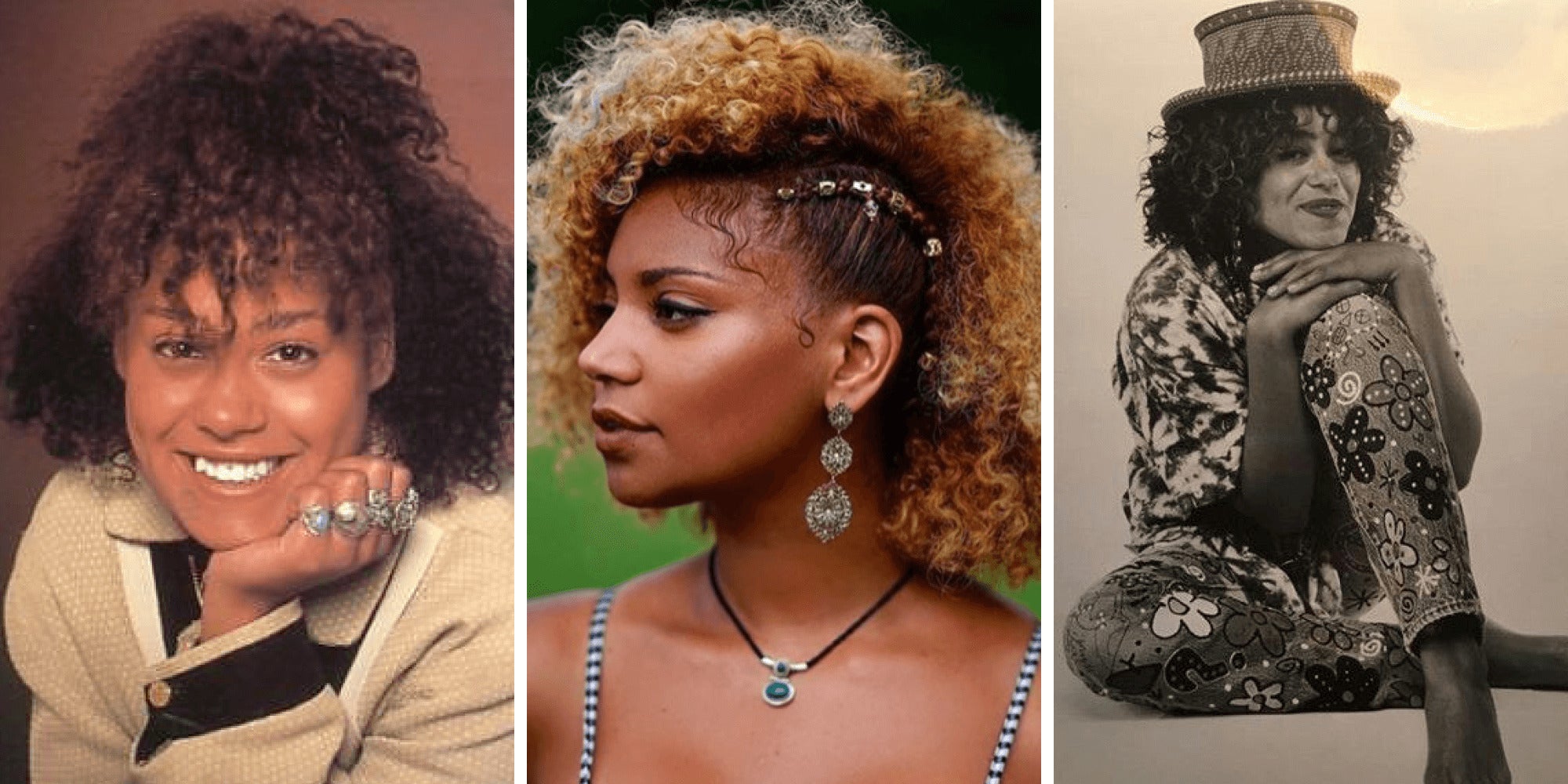
Freddie wore hers natural, sometimes half up, often under a hat or a headwrap, paired with baggy pants, printed overalls and African prints. The modern descendant is the beads and cuffs people work into protective styles now. If you want the length to do it, human braiding hair takes adornment better than synthetic because it does not slip.

Jaleesa wore a curled press and an asymmetrical blowout, which is about as 80s as a silhouette gets: one side tucked, the other side with all the volume. Both are still in rotation, usually with a flat iron doing the work a hot comb used to do.

Denise's hair changed as the character settled, moving into twists and then into locs, which became the signature. Faux locs now do the same job with none of the permanence — you can wear them for 4-8 weeks and take them down. Beads and gold cuffs still finish the look.

Kimberly wore a short press and curl with feathered bangs framing the face, finished with big jewellery. If you want the cut without the heat or the commitment, a short unit or a layered sew-in gets you there and grows out with you. Straight bundles cut into layers hold a feathered bang better than a wave texture will.
Living Single
Living Single put four women with careers in a Brooklyn brownstone and dressed them in Kente cloth, headwraps and locs alongside everything the 90s was doing. The hair carried the decade forward.

Sinclair made the case that braids are a styling base and not an end point: braided updos, flips, and shapes you cannot get out of loose hair. Braids remain the workhorse protective style. With braiding hair you can install with the crochet method or set your finished individuals on rollers. More options are in 8 beginner-friendly protective styles.
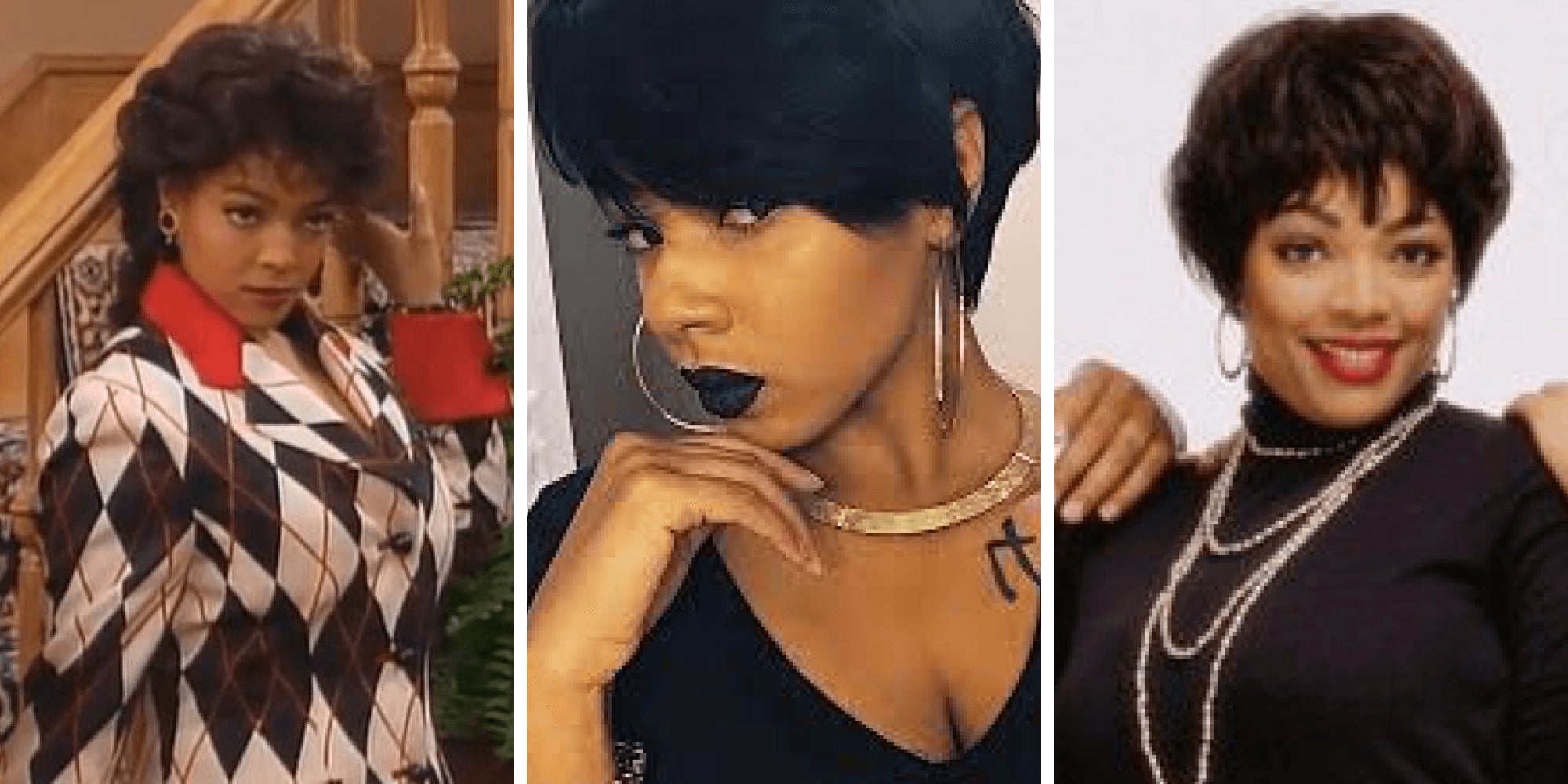
Regine changed her hair constantly, and the character was an argument for wigs before that argument was fashionable: a different silhouette every episode with none of it done to her own hair. She favoured a short shape that kept her face and outfit in front. If you want to try short without cutting, that is exactly what a ready-to-wear wig is for — wrong decision, take it off.

Khadijah, the magazine editor at the centre of the show, wore bouncy curls and textured waves in a sandy brown that became her signature. The curls were almost certainly iron-set; you can get the same bounce with a wand on blow-dried hair, or with loose wave bundles that arrive with the pattern already in them.
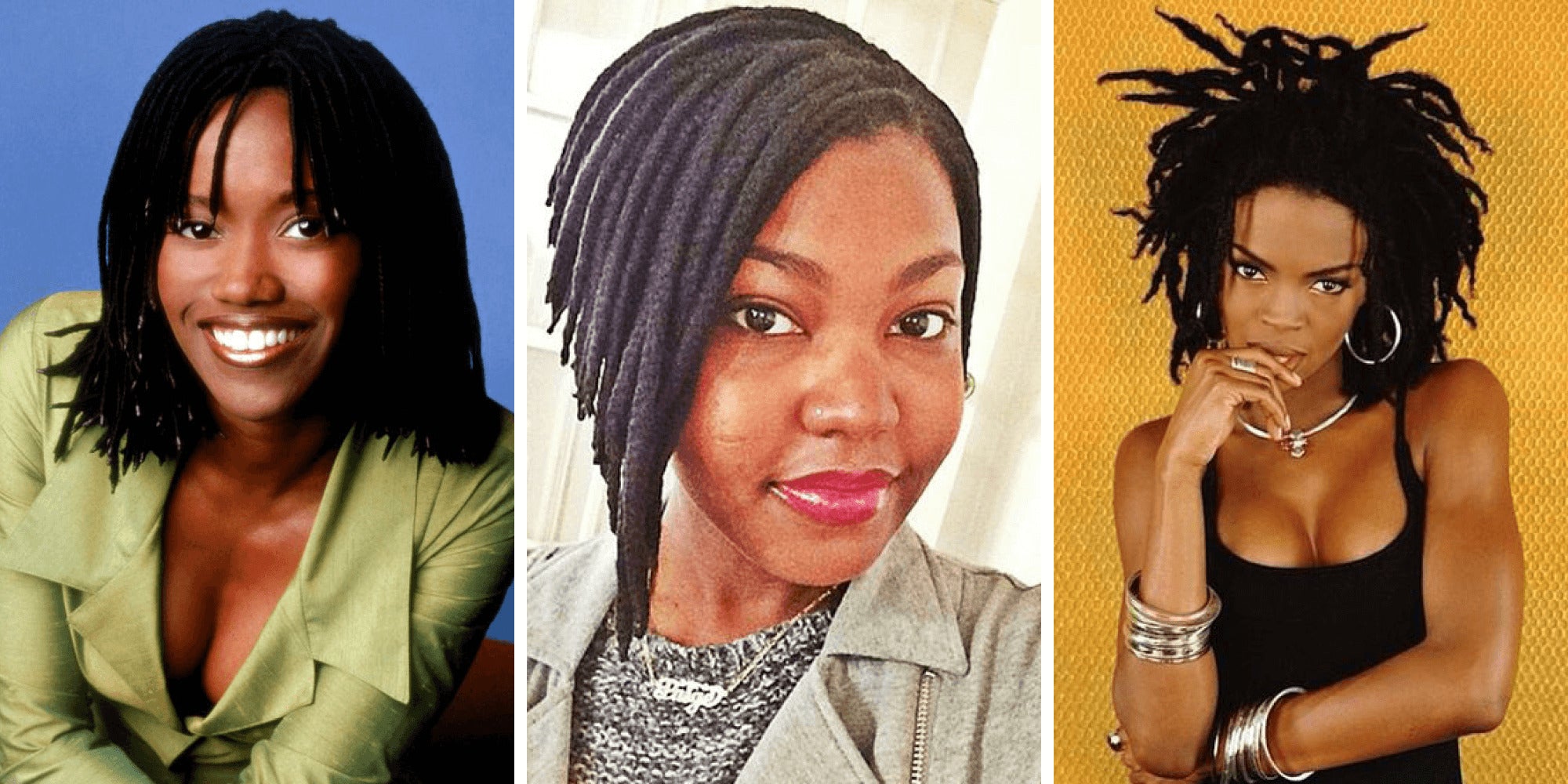
Maxine wore shoulder-length individual braids, jet black and sealed at the ends, and moved between those, twisted bantu knots and shells worked into the part. Lauryn Hill wore versions of the same looks a few years later, and between them they set up most of what is trending now.
How do you recreate 80s finger waves?
Finger waves are the one 80s style that is pure technique — no chemicals, no heat, no extensions required. It takes about an hour the first time and 30 minutes once you have done it twice.
- Start on clean, damp hair, either freshly pressed or a short straight unit on a block. Damp hair holds the mould; dry hair will not take a ridge.
- Part deeply to one side and work a single section at a time, front to back. Trying to wave the whole head at once is why most first attempts fail.
- Apply a firm-hold setting lotion or gel to the section — roughly a dime-sized amount per two inches of hair. Too little slides, too much flakes.
- Push the hair forward with the flat of the comb, hold the ridge down with your index finger, then comb the next inch backward. Repeat down the section to build the S.
- Clip every ridge as you form it, then dry completely: 30-45 minutes under a hooded dryer, or 2-3 hours in air. Remove the clips only when the hair is bone dry, or the ridges drop.
Which 80s style should you choose?
- You want Jheri-curl softness with nothing to spray. Go with water wave or loose wave bundles. The trade-off is that defined wave textures need a weekly co-wash or they dull.
- You want the big, teased volume of the decade. Body wave for a soft S, deep wave for a tighter pattern that holds height longer.
- You want an asymmetric bob or a sleek press. Straight bundles cut asymmetrically. Straight hair shows every blunt line, so this one is worth paying a stylist for.
- You want braids, beads and length. Human braiding hair — 5-8 packs for a full head, 1-2 for a braided ponytail.
- You want to try short without cutting. A human hair wig you can cut yourself, or a headband wig that goes on in under a minute.
- You have no idea where to start. Begin with the best sellers, and read the guide to hair types before you commit to a texture.
Frequently asked questions
What were the most popular 80s Black hairstyles?
The Jheri curl, finger waves, the asymmetric bob, the hi-top fade, braided extensions and the press and curl. Relaxed and pressed hair was the everyday default; the Jheri curl was the main alternative. Hip hop pushed everything taller and wider through the second half of the decade.
What is a Jheri curl?
A two-step perm. A softener breaks the hair's existing pattern, then a curl rearranger sets it into loose, glossy curls. It dominated the 80s and required activator spray every day to stay wet-looking, which is the part nobody misses. A water wave install gets the same shape with no chemicals.
How do you get 80s hair without a relaxer?
Use extensions for the shape instead of chemicals for the texture. Water wave or loose wave bundles replace the Jheri curl, straight bundles replace the press, braiding hair replaces braided extensions, and a wig replaces the cut. Your own hair stays braided down underneath and untouched.
Are 80s Black hairstyles back in style?
The shapes are, the chemistry is not. Finger waves, asymmetric cuts, crimped volume and braids with beads are all in current rotation. What has been dropped is the relaxer and the Jheri curl perm, because extensions now deliver the same silhouettes without permanently altering your hair.
How much hair do you need for 80s braided extensions?
Budget 5-8 packs for a full head of individual braids, and 1-2 packs for a braided ponytail. Longer or thicker braids sit at the top of that range. Human braiding hair costs more than synthetic per pack but does not slip when you add beads or cuffs.
Can you do finger waves on natural hair?
Yes, but the hair needs to be pressed or blown out first. Finger waves are moulded flat against the head, and a tight curl pattern fights the ridge. On damp, straightened hair with a firm-hold gel, the set holds 3-5 days. On unstraightened coils it will lift within hours.
What is the difference between a press and curl and a silk press?
The tool and the finish. A press and curl used a hot comb on the roots and marcel irons for the curl, leaving body and movement. A silk press uses a flat iron for a straighter, flatter result. Both are heat on natural hair, so both carry the same risk of losing curl pattern over time.
How long does a sew-in of these styles last?
6 to 8 weeks, 10 at the outside. Past 12 weeks you risk matting at the roots and tension damage at the hairline. The braid down underneath takes 30-60 minutes and uses 6-12 cornrows depending on the pattern your stylist chooses.

